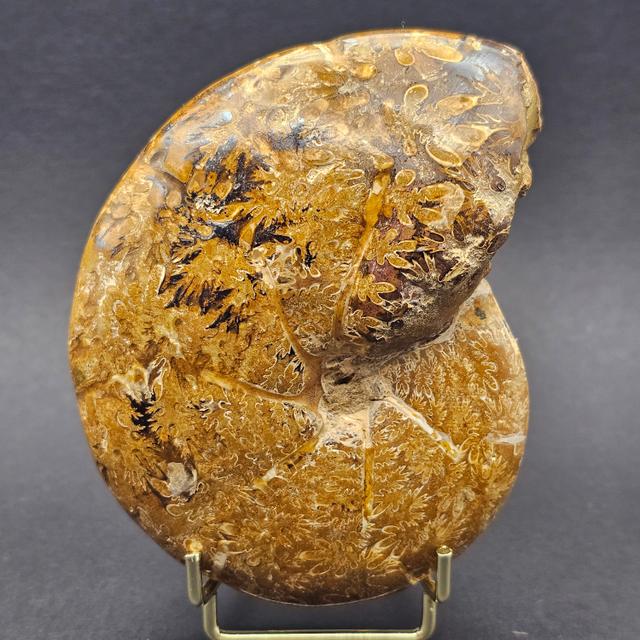
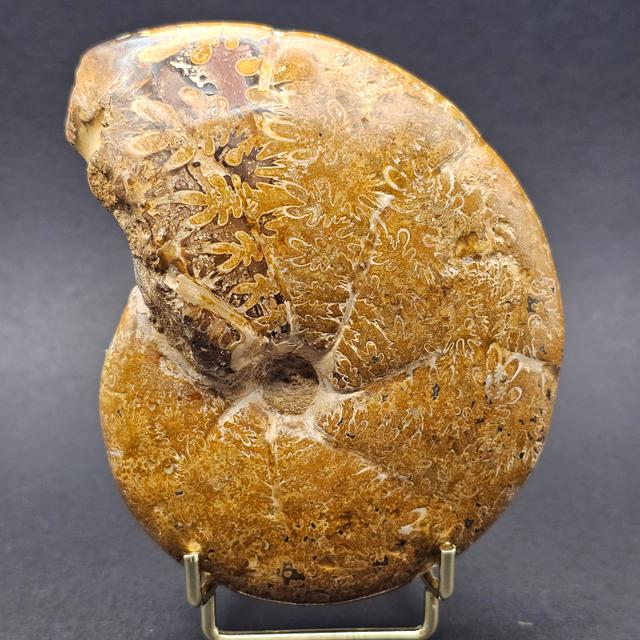
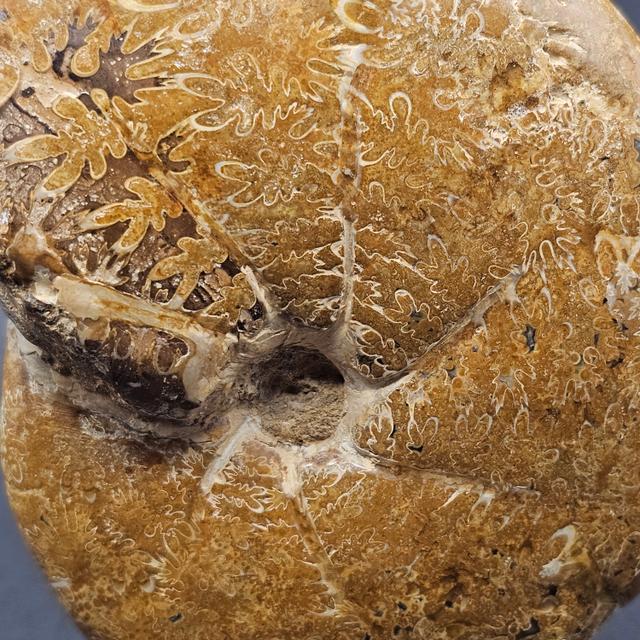
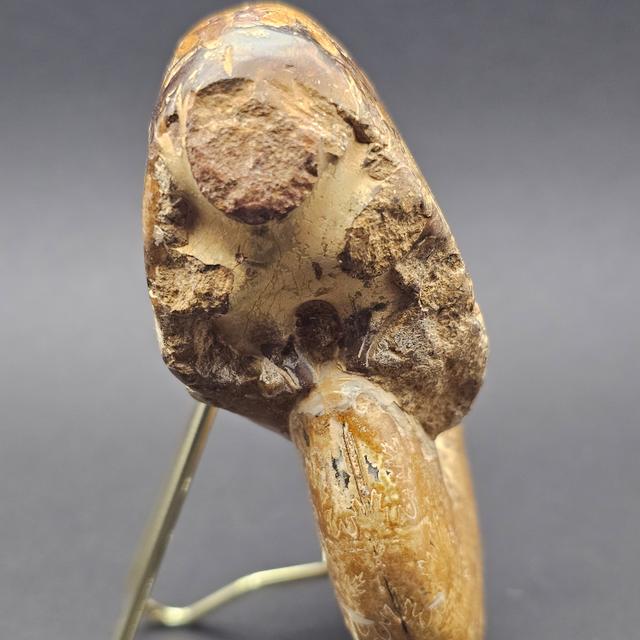
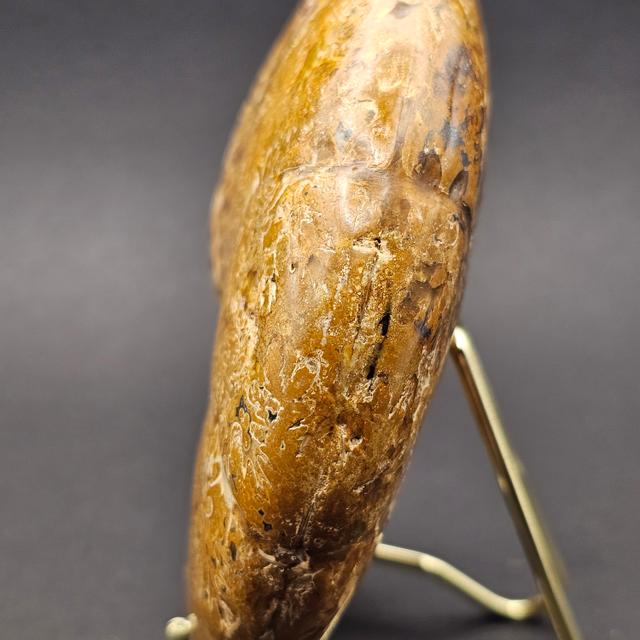
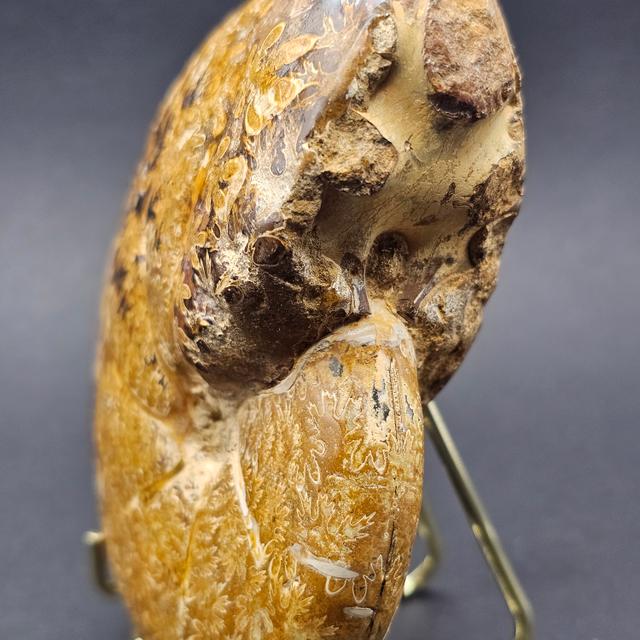
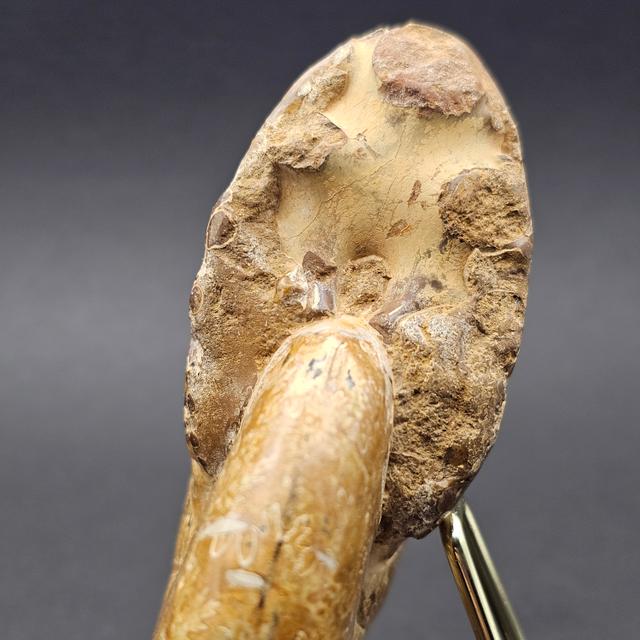
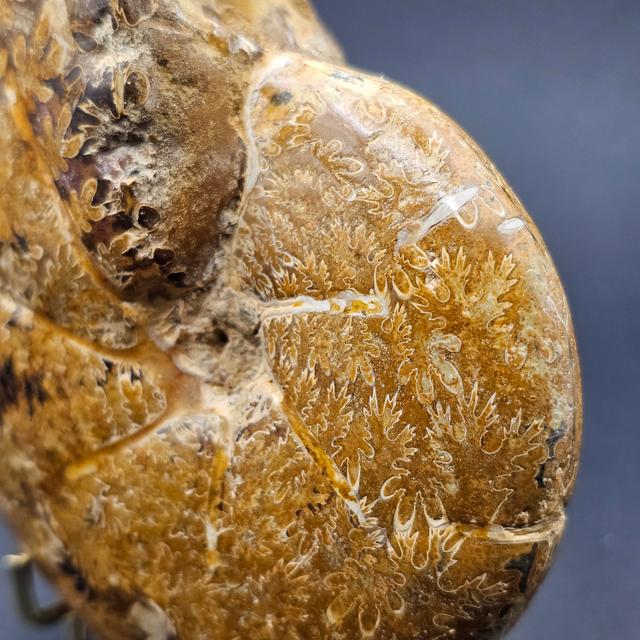
 Exact Specimen Shown
Ammonites
·Real Fossil
Polished Madagascan Phylloceratid Ammonite - 305g
- Real Fossil
- 160 million years
- Ships worldwide
£69.99
● In stock — dispatched within 2 working days
A sizeable 305g polished Madagascan ammonite featuring exquisite leaf-like suture lines and rich honey-brown tones. Approx. 160 million years old. Measures approximately 8 × 9.5 cm, with a natural thickness variation of around 3–4 cm.
Specimen Record
DTF-D4E39233Exact specimen
The photographs show the exact item you will receive.
- Species
- Phylloceras sp. (cf. Holcophylloceras / Calliphylloceras)
- Identification confidence
- Not recorded
- Age
- 160 million years
- Geological period
- Jurassic (likely Oxfordian to Tithonian)
- Formation
- Unknown Madagascan formation
- Locality
- Madagascar
- Dimensions
- Not recorded
- Weight
- Not recorded
Condition & Treatment
- Repair
- Not recorded
- Restoration
- Not recorded
- Stabilisation
- Not recorded
- Polishing
- Not recorded
- Composite
- Not recorded
"Not recorded" means we hold no verified record for that detail — it is not a claim either way.
Curator Note
The preservation of the 'leaf-like' suture lines is the standout feature of this piece. Unlike many ammonites where the suturing is simple, Phylloceras-type specimens exhibit some of the most complex geometric patterns in the fossil record, making them highly sought after by those who appreciate the intersection of natural history and abstract art.
At a Glance
Type
Genuine fossil
Display
Substantial hand-sized piece; displays well lying flat or on a small easel stand.
About This Fossil
This substantial Madagascan phylloceratid ammonite is a testament to the intricate beauty of prehistoric cephalopods. Weighing 305g, the specimen has been expertly polished to reveal a rich palette of honey, cream, and deep chocolate tones. The surface is distinguished by its 'phylloceratid' suture lines—the complex, leaf-like patterns where the internal chamber walls (septa) met the outer shell. These delicate, frilly markings provide a striking contrast against the darker, mineralised stone.
The specimen displays fascinating mineral diversity, including iron-rich hematite staining that lends the shell deep reddish-brown and metallic-looking accents. While the majority of the fossil is smooth to the touch, natural rougher sections remain around the aperture and edges, offering a glimpse into the raw state of the fossil before preparation. Small mineral-filled cracks and surface irregularities are present, serving as authentic markers of the arduous fossilisation process over millions of years.
Formation & Preservation
As the ammonite died and sank to the Jurassic seafloor, it was rapidly buried by fine-grained sediments. Over millions of years, the organic shell material was replaced by minerals, including iron and silicates, which were carried by percolating groundwater. The distinct 'phylloceratid' suture lines visible here are particularly intricate, representing the evolution of complex septal walls which allowed these creatures to withstand the pressure of deeper waters.
What Makes This Specimen Special
The preservation of the 'leaf-like' suture lines is the standout feature of this piece. Unlike many ammonites where the suturing is simple, Phylloceras-type specimens exhibit some of the most complex geometric patterns in the fossil record, making them highly sought after by those who appreciate the intersection of natural history and abstract art.
Authenticity & Sourcing
Real vs Replica
- This is a genuine fossil — not a replica unless clearly stated. Clearly described and honestly presented.
- You will receive the exact fossil shown in the photographs.
Ethical Sourcing
- Sourced from established suppliers and known commercial sites. We do not buy from localities we know to be protected, scientifically restricted, or subject to export controls. Origin and sourcing information is shared where known.
- ✓We will not knowingly handle specimens removed in breach of any country's heritage or export laws.
Origin & Natural Variation
Stated origin (Madagascar) and formation (Unknown Madagascan formation) are based on supplier information and available geological references. Identification can vary in certainty — especially for fragments — so where exact locality cannot be independently verified, we describe the formation rather than a single quarry.
Fossils are natural objects. Expect minor variation in colour, surface texture, and matrix, mineralisation and surface detail. Treatment information is shown under Condition & Treatment where it is recorded. “Not recorded” means we hold no verified record for that detail; it is not a claim that no treatment occurred.
Read our full authenticity & honest descriptions policy or the authenticity & sourcing clause in our terms.
Shipping, Returns & Packaging
• UK shipping: Free on orders of £50 or more. Standard £4.95 (Royal Mail Tracked 48, typically 2–3 working days after dispatch).
• International: Available worldwide. Rates at checkout.
• Packaging: Individually wrapped, cushioned, and boxed. Fragile specimens receive extra protection.
• Dispatch: Within 2 working days (framed, mounted, or made-to-order pieces take 1 additional working day).
• Returns: 30-day returns. Contact us first. Item must be in original condition.